When people move, policies should too: Event takeaways for regional peer-learning
2026 February 04
Population change is no marginal issue for Europe's regions. As demographic decline accelerates across large parts of the continent, regional policymakers are increasingly confronted with a dual challenge: how to respond to continued out-migration, while turning mobility into a source of resilience rather than loss.
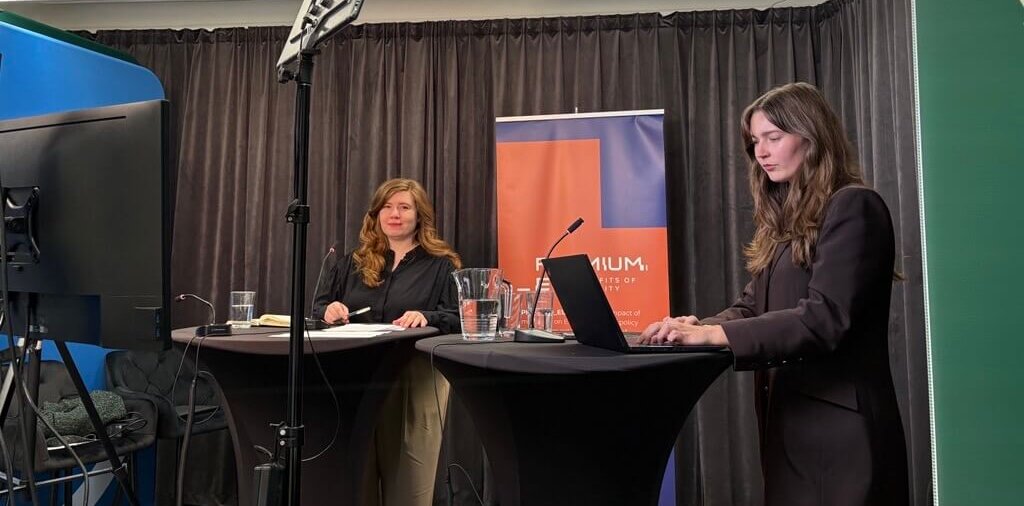
These questions were at the centre of the PREMIUM_EU webinar When people move, policies should too, which brought together researchers and practitioners working directly with migration, labour mobility and regional development.
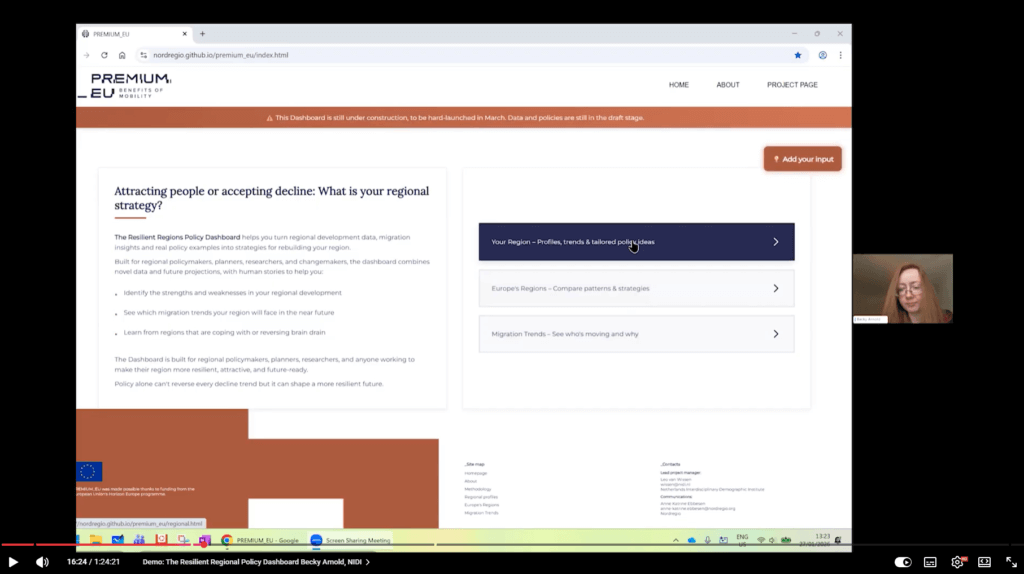
The event also marked the soft launch of the Resilient Regions Policy Dashboard: a new interactive policy tool designed within the project to help regions translate complex migration and development data into actionable policy insights.
There is no "average migrant"
One of the strongest messages from the panel was that migration motivations are highly diverse and dynamic. Migrants move for work, education, family, safety, lifestyle or temporary opportunities, and often combine several motivations over time. This diversity makes it difficult for regions to design "one-size-fits-all" attraction or retention policies.
Panellists stressed that policymakers often plan for a single idealised group, typically young, highly skilled workers, despite the fact that different groups relate very differently to place, belonging and integration. Some migrants intend to stay long term, others move temporarily, and some never plan to fully integrate socially, even if they contribute economically. Regions need differentiated policy mixes that account for who is moving, why, and for how long.
Jobs matter, but they are rarely enough
While labour market opportunities remain central to regional attractiveness, the panel agreed that employment alone does not attract and keep young and international talent. Access to housing, education, childcare, cultural life, public services and social networks all influence whether people choose to stay in a region.
Several panellists highlighted that belonging and everyday liveability are often underestimated in regional strategies, partly because they are harder to measure. Yet migrants and young families frequently base long-term decisions on these factors rather than on wages alone. Attraction policies that stop at job creation risk short-term gains and long-term churn. Retention depends on whether "the whole life works," not just the labour market.
Integration is a regional development issue, not only a migration issue
The discussion repeatedly returned to the idea that integration should be treated as a core regional development concern rather than a standalone migration policy. Successful integration affects labour market participation, social cohesion, service provision and long-term demographic sustainability.
Panellists emphasised the importance of multi-level coordination: local authorities cannot carry integration alone if national frameworks, funding mechanisms or legal pathways work against regional needs. At the same time, regions that actively involve employers, civil society and migrants themselves tend to design more realistic and effective responses.
Integration outcomes depend on coordinated action across sectors and governance levels, with regions playing a key role in convening.
Regions compete for the same people, creating blind spots
A recurring concern was that many regions pursue identical attraction strategies, often targeting the same mobile groups. This competition can lead to unrealistic expectations, especially in contexts with shrinking demographics where the overall pool of potential newcomers is limited.
Panellists argued for more honest conversations about structural decline, service consolidation and adaptation, rather than continuous competition over a shrinking labour force. Learning from comparable regions, rather than copying headline "success stories", was highlighted as a more productive way forward. Resilience may require adaptation and prioritisation, not perpetual competition.

From discussion to action: Start exploring the Resilient Regions Policy Dashboard
The webinar concluded with a clear message: better policy starts with better questions. To support this, the event soft-launched the Resilient Regions Policy Dashboard, a new tool designed specifically for local and regional policymakers.
The dashboard allows users to:
- Explore how their region compares to similar regions across Europe,
- Connect migration trends and migrant perspectives with regional development profiles, and
- Find policy inspiration from other regions as well as input their own regional policy ideas, contributing to a growing, practice-based knowledge base of attraction and retention measures.
Rather than prescribing best practices, the tool supports peer learning and context-sensitive policymaking, helping regions identify which policy mixes may be relevant to their specific situation.
Start exploring the latest version of the Resilient Regions Policy Dashboard and see how your region's development status and demographic trends fit into the wider European landscape.
Watch the event back
The full webinar is available to watch back. For those interested primarily in the tool, the live demonstration of the Resilient Regions Policy Dashboard is also available as a standalone video on Nordregio's YouTube channel (link).
Together, the discussion and the dashboard mark an important step in making migration research more usable, more contextual, and more connected to real policy work in Europe's regions. On 10 March, the dashboard will launch in its final form at the final conference in Brussels (available for streaming - find out more on this link)